
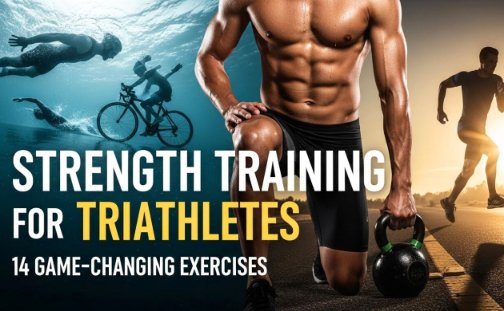
Resistance training for triathletes has gone from being an … optional bonus to a necessary inclusion. The modern triathlete knows that a balanced training regime, strength in swim, bike and run is built on resistance to…addContainerGap / Offset Value 1 1 Why use Rock N Roll Cable System?
The grueling nature of triathlon racing challenges athletes to their breaking point in three separate sporting events. Swimming uses upper body strength and core control. The sport of cycling requires leg strength and cardiovascular capability. Running requires shock absorption and optimal force generation. Without correct strength for triathletes exercises, fatigue and injury set in quickly and performance plateaus become the norm.
“Triathlon training from three of the best combined with a great story! Be Iron Fit contains an abundance of valuable training knowledge.”–Scott Tinley, Two-Time Ironman® World Champion on the first edition Time is your most precious commodity. You’ll learn that from the best-selling author of The Triathlete’s Training Bible and his coach for several decades, Joe Friel.Learn how strength training for triathletes can help you swim, bike, and run faster and with fewer injuries.
Strength Training for Triathletes: Non-Negotiable Strength training is essential for a triathlete.
The Multisport Advantage
Part of training for a triathlon is the specificity, since it involves racing in 3 separate disciplines. Unlike athletes who compete in one sport and can acquire specific strength through their primary activity, triathletes require more balanced development for the three disciplines of swimming, cycling and running.
Performance Enhancement Benefits:
Enhanced power potential in all 3 sports.
Greater muscle endurance for long course racing
Motion economy refinements to minimize energy loss
More endurance in competition fatigue periods
Lower repetitive motion stress on the body
Higher levels of force production during critical race moments
Study after study show that age group triathletes doing 2-4 strength training sessions/week as part of a structured per iodized strength-training for triathletes program improve race times by 3-7% The biggest gains were seen in running where accumulated fatigue traditionally diminishes performancIe8. These adaptations are due to an improved neuromuscular efficacy, increased power: weight ratio and better fatigue resistance.
Breaking Through Performance Plateaus
Volumes of training have become higher and higher as performing triathletes hit walls where stagnation of development will occurs. More swimming, biking and running — sans strength work — typically results in overtraining rather than breakthroughs. Strength training for triathletes is the catalyst that they need to break through these plateaus.
Common Plateau Breakers:
More power VS Without having to add endurance volume
Higher running economy Trains better biomechanics
Stronger Leg Muscles = Improved Cycling Efficiency
By toning your upper body, they enable better swim propulsion
Mental freshness from training variety
Top triathletes around the globe incorporate 2-4 strength sessions weekly into their training cycles as they understand that an overall development includes both endurance and strength.
Vital Muscles In Body Building for Triathletes
Core: The Triathlon Power Center
A strong core is the origin of effective movement in all three triathlon sports. Good strength training for triathletes places a major emphasis on the all around development of the core for power transfer, injury prevention and postural endurance.
Core Training Priorities:
Anti-Extension Strength:
Stops lower back arching while swimming and keeps entire aero position held on bike. So important for long course racing where performance over the miles is key.
Anti-Rotation Stability:
Handles twisting forces on the swim strokes and intervals of running stride. Inadequate anti-rotation strength leads to wasted energy compensation and non-efficient movement.
Flexion and Lateral Control:
Benefits efficient pedaling and running stability. These are the elements that were more and more critical as the race went longer distance and fatigue set in.
Lower Body Power Systems
In triathlon, a strong lower body is key for both bike output and run efficiency. Strength for Triathletes focuses on developing a well balanced leg, looking at both power production and endurance capabilities.
Critical Lower Body Muscles:
Quads for cyclers and runners thrusting themselves forward.TRUEungeons!
Glutes for everything you do in running, biking and swimming
Hamstrings for cycling pull through and running deceleration
Running Propulsion & Cycling EfficiencyCalves
Running stride/sim kick– Hip flexors
Bike – in standard distance races, time on the bike is roughly 50% of overall race time so cycle leg strength becomes an important focal point for most strength training for triathletes programs.
Upper Body Balance
Although triathlon sports are lower body dominant, the strength in upper bodies is necessary for effective swimming and position endurance during cycling. Triathletes who want to develop well-rounded overall strength, as such, need to also focus on upper body training.
Key Upper Body Areas:
Back and Shoulders:
Major muscles for swimming movements. Those same action-hero lats and shoulders power forward triathletes in water.
Chest and Arms:
Aid push phase of swim stroke and stability on the bike. Suffering in these muscles spares your upper body from becoming tired and affecting bike aerodynamics.
Grip and Forearms:
‘Be aware of bike handling and to have swim technique in your legs. Frequently neglected in the strength training regimen of triathletes but essential for good racing.
The 14 Best Strength Training for Triathletes Exercises
Single-Leg Squats and Step-Ups
Unilateral leg strength which balances out your asymmetries builds the single-leg stability necessary for running. These are basic triathlete strength training exercises.

Execution:
3: Single-Leg Squat Stand on one leg; lower body by bending knee in balanced squat. Drive through heel to come back up and return to start.
Bounding Step-Ups: Another FS protocol is to step up, then bound onto the box.
Triathlon Benefits:
Corrects left-right strength imbalances
Develops running-specific stability
Strengthens glutes and quads
Improves single-leg power production
How to: Do 3 sets of 10-12 reps per leg twice a week.
Deadlifts (Conventional or Romanian)
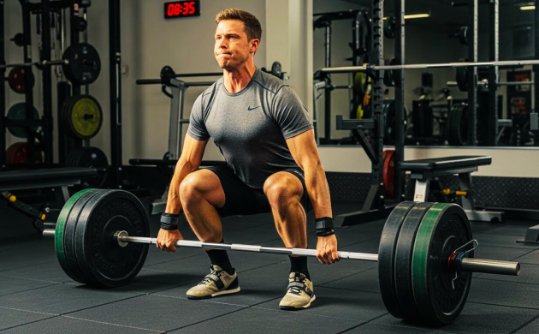
Cycling power and running efficiency are built on the development of the posterior chain. Deadlifts are one of strength training for triathletes exercises which is crucial to developing whole-body power.
Execution:
Position feet hip-width, then hinge at hips to hold barbell. Keep spine neutral and lats engaged, drive through heels to extend hips standing up.
Triathlon Benefits:
Builds cycling power production
Strengthens running propulsion muscles
Develops hip hinge pattern
Creates injury-resistant posterior chain
Programming Options: 3-4 sets of 5-8 repetitions, 1-2 times per week
Plank Variations (Front, Side, RKC)
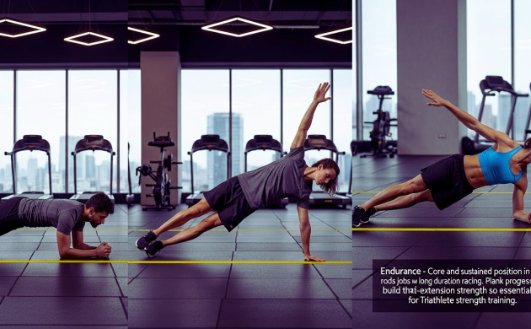
(2) Endurance — Core and sustained position in more aero rods jobs won long duration racing. Plank progressions build the anti-extension strength so essential for triathlete strength training.
Execution:
Front Plank: Hug forearms and tows for a straight plank. Engage core preventing hip sag.
RKC Plank: Basically the front plank, but tensing up as hard as you can so that every muscle in your body is activated; keep pushing your elbows towards your feet to increase tension even more.
Triathlon Benefits:
Builds core strength for aero position
Maintains running posture under fatigue
Prevents lower back pain
Builds mental toughness
Programming: 3-4 sets, 30-90 seconds per hold, 3-4 times per week
Pull-Ups and Lat Pulldowns
Strong pulling muscles are essential for swimming propulsion. These are the foundation upper body exercises in strength training for triathlon.
Execution:
Grab pull-up bar just wider than shoulder-width apart. Raise body up until chin is over bar, lower down with control. For pulldowns, pull bar to upper chest with torso upright.
Triathlon Benefits:
Develops swimming propulsion power
Strengthens entire posterior chain
Improves shoulder stability
Builds functional upper body strength
Program: 3-4 x 8-12 reps, 2 days per week
Box Jumps and Depth Drops
Explosive Power = Faster Transitions+ Better Brick Workouts + Improved Running Economy. Plyometrics improved strength training for triathletes routines.
Execution:
Hop off box, then explosively jump onto stable box, and land softly. Step down and reset.
Depth Drops: Simply stepping off a low box, absorbing as you land softly, then jumping up again.
Triathlon Benefits:
Develops explosive running power
Improves running economy
Enhances reactive strength
Builds athletic movement capacity
Programming 3 X 5-8 jumps, weekly, double up to twice per week
Cable or Band Rotations
(Rotational power and stability are critical for both stroke mechanics in swimming and efficient gait when running.) These are exercises that have a very important role in core training for triathletes.
Execution:
Set Up: Stand perpendicular to the cable/band anchor. Twist with your core pulling the handle across the body and return under control. Maintain stable lower body throughout.
Triathlon Benefits:
Develops rotational power for swimming
Strengthens obliques and core
Improves running stability
Prevents energy leaks
Programming 3 x 12-15 R/L per side twice weekly
Bulgarian Split Squats
Hip mobility and single-leg strength meld in this challenging move. Bulgarian split squats for triathlon: Specific strength training exercises Bulgarian Split Squats address weaknesses often found in the traditional strength training plan for triathletes.
Execution:
Step one foot onto bench behind you. Lower body by bending front knee until almost touching the floor. Push through the front heel to return.
Triathlon Benefits:
Develops powerful cycling muscles
Improves running propulsion
Enhances hip mobility
Corrects bilateral strength differences
Programming: 3 x 10-12 reps per leg; twice per week
Pallof Press
Anti-rotation core strength will also help keep your body in alignment through each of the three disciplines. The Pallof press is one of the most important stability exercises when it comes to strength training for triathletes.
Execution:
Face side of cable or band. GRASP HANDLE ACROSS CHEST AND PUSH FORWARD AGAINST ROTATIONAL PULL. Pause extend and then come back with control.
Triathlon Benefits:
Develops anti-rotation stability
Maintains aero position on bike
Improves running efficiency
Prevents compensatory movements
How to do it Programming: 3 sets of 12-15 reps on each side, three times a week
Hip Thrusts
Cyclists develop through-the-roof power and runners lengthen their stride and push more in the last of those. Hip Thrusts also enhance posterior chain engagement in lower body weight lifting for triathletes programs.
Execution:
Lower your upper back down to the bench, keeping feet flat on the floor. Drive through heels to lift hips, raising until thighs and torso are in line. Squeeze glutes at top.
Triathlon Benefits:
Maximizes cycling power output
Improves running efficiency
Develops hip extension strength
Prevents overuse injuries
How to do it: 3 sets of 10-15 repetitions, twice a week
Medicine Ball Slams
Power generation will enhance all three of these and serve as conditioning work. Medicine ball strength training for triathletes brings elements of dyanmic movement into resistance work.
Execution:
Instead, hold medicine ball overhead and come up onto toes and explosively slam medicine ball into ground using entire core. Catch bounce and repeat immediately.
Triathlon Benefits:
Develops total body power
Improves explosive capacity
Provides conditioning stimulus
Builds mental toughness
Programming 3-4×10-12 slams, 1-2 times a week
Single-Arm Dumbbell Rows
Support swimming on one side while improving overall strength and technique. These bad boys give you the all-important rear part of the shoulder in a strength and conditioning system for triathletes.
Execution:
Position one hand and knee on bench, hold dumbbell with opposite hand. Stay strong in torso as you pull the weight to hip, keep it there, and lower with control.
Triathlon Benefits:
Strengthens swimming propulsion
Corrects strength imbalances
Develops core stability
Improves posture maintenance
How to do it: 3 sets of 10-12 reps, each arm; repeat this exercise twice a week.
Goblet Squats
Full-body strength and mobility meet in goblet squats. This functional exercise provides basic movement patterning for strength training in triathletes.
Execution:
Kettlebell or Dumbbell in hand at chest level. Squat, maintaining upright chest and weight on heels. Drive through heels to stand.
Triathlon Benefits:
Develops leg strength for cycling
Improves hip mobility
Strengthens core and upper back
Teaches proper squat mechanics
How to program it: 3 sets of 12-15 reps, done twice a week
Face Pulls
“Implicatoins for shoulder and posture health – Building the back of the shoulder. Face pulls help avoid a few of the most prevalent overuse injuries in strength training for triathletes.
Execution:
Secure rope handle to cable at face level. Draw in rope toward face, pulling hands apart and squeezing shoulder blades. Control return to start.
Triathlon Benefits:
Prevents swimmer’s shoulder
Improves bike position tolerance
Strengthens upper back
Balances pushing and pulling
Programming: 3-4 x 15-20, three times per week
Farmer’s Carries
Load carries increases total body strength, grip endurance and core stability. These movements add strength potential in a general way for the triathlete.
Execution:
Grip heavy dumbbells or kettlebells with hands. Upright walking for distance, engaging the core. Keep shoulders back.
Triathlon Benefits:
Builds grip strength for swimming
Develops postural endurance
Strengthens entire body
Improves mental toughness
Program: 3-4 sets of walking for 30-60 seconds, twice per week
Programming Strength Training for Triathletes
Periodization Through Training Seasons
Triathlete strength training must be periodized and correlate with the phases of triathlon training. Off season builds the strength base, race season works off this but with lighter work to maintain.
Annual Training Phases:
Base Phase (12-16 weeks):
Get serious about Max Strength, Regress Imbalance and Progress Work Capacity. Base phase strength training for triathletes is higher in volume.
Build Phase (8-12 weeks):
Develop ease of power and sport specific strength. Volume decreases as intensity increases. Exercises become more triathlon-specific.
Race Phase (12-20 weeks):
Keep strength with 1-2 sessions per week. Focus on quality, stay healthy and recover between key workouts and races.
Recovery Phase (2-4 weeks):
Active recovery, just a little bit of movement mobility work. Some light body weight strength training for Triathletes in this regeneration phase.
Weekly Training Schedule Integration
Pairing strength work with swim-bike-run training involves some scheduling gymnastics. For most triathletes, 2-3 weight work-outs should be the ideal number of sessions to try and fit in per week, depending on your training phase.
Sample Weekly Structure:
Off-Season:
Monday: Lower body + bike If I’m being honest, after not really pushing weights at the gym in 3 days (believe me it was difficult to resist) my lower body workout just ended up being a tortuous struggle.
Tuesday: 45mins swim + upper body weights
Wednesday: Run + core
Thursday: Swim + bike
Friday: Total body strength
Weekend: Long bike and run
Race Season:
Monday Lower body maintenance/+ Bike 10×30″/1:00 moderate spin #:) AM Notes Really tired today, but it wasn’t that hard of a ride.
Tuesday: Swim focus
Wednesday: Run + core work
Thursday: Bike focus
Friday: Upper body + swim
Weekend: Key workouts or races
Managing Training Load
The development of an effective strength training program for triathletes must include optimisation of load prescription; successfully preventing overreaching and facilitating adaptation to meet requirements of the sport.
Load Management Strategies:
Monitor global training stress of all different sports.
Drop intensity volume during high interval-day weeks.
Program recovery weeks every 3-4 weeks
Sleep and nutrition should be top priority for recovery
Modify depending on personal response to and recover from stimuli
Triathalon: injury prevention with strength training.
Common Triathlon Injuries
Injuries for Multisporters are produced by repetitive action in three different sports. Relevant strength training for triathletes addresses these weak points in a preventive fashion.
Frequent Triathlon Injuries:
Runner’s Knee:
Patellofemoral pain from running volume. Strong hips and quads are what keep this nuisance at bay.
IT Band Syndrome:
Pain on sideways of knees from cycling and running. Strong hips and glutes are protective.
Swimmer’s Shoulder:
Rotator cuff problems from repeated overhead motion. Posterior shoulder strengthening prevents problems.
Lower Back Pain:
Weak core and cycling posture put stress on the lower back. Core endurance prevents these issues.
Achilles Tendinitis:
Running volume stresses the Achilles. Especially, calf strength and correct loading of the tendon have a protective role against tendinopathies.
Preventive Exercise Integration
Choose the right strength exercises for triathletes in your program and you’ll be able to avoid injuries before they occur.
Injury Prevention Priorities:
Single-leg strength for running stability
Posterior chain development for cycling
Rotator cuff strengthening for swimming
Core endurance for all disciplines
Mobility work for joint health
In every strength training for triathletes program, (including race season) incorporate injury preventatives into the workout. None of these maneuvers is a negative cover but they are a positive response.
Nutritional Support for Strength Training in Triathletes
Fueling Multisport Training
While both endurance and strength work are needed by triathletes, the nutritional demands on this group would be enormous. Sufficient nutrition, in order to support both exercise modalities and facilitate recovery.
Nutritional Requirements:
Protein Needs:
Strength training for triathletes: 0.7-0.9 grams of protein to pound of body weight daily For the triathlete who strength trains, you should aim to consume 0.7-0.9 grams of protein per pound of body weight every day. Spread over 5-6 meals for best recovery.
Carbohydrate Demands:
High training volumes need high amounts of carbohydrates. The majority of triathletes require 3-5 grams per pound of body weight per day, depending on the intensity of their training.
Fat Requirements:
Sufficient fat consumption (20% -30% of caloric intake) for hormonal production, vitamin uptake and long hour “go all day” energy needed for triathlon.
Recovery Nutrition Strategies
Strategic nutrient timing enhances athletic performance, and strength training for triathletes programs are no exception.
Timing Guidelines:
Pre-Strength Training:
Eat simple carbs and protein 1-2 hours before sessions. Stay away from heavy meals that bog you down.
Post-Strength Training:
30-60 minutes later, a blend of protein and carbs that help you recover (from muscle fatigue) and replace the glycogen you burned.
Daily Habits:
Spread protein out over the day, focus on whole foods, hydrate well and adjust intake according to your training workload.
Strength Training for Triathletes FAQ.
How much strength training a week should triathletes incorporate?
Two to three strength training for triathletes workouts per week, depending on the phase of your season and your level of experience, are ideal for most triathletes: Up to 3 sessions during the base building phase is optimal for developing base strength. As the racing season nears, 2 sessions of maintenance maintain your gains while you continue preparations for your main endurance workouts. For age groupers who are juggling work and family, 2 weekly year-round sessions will be effective. Top professionals can train up to 3-4 times per week in the off-season. The trick is finding that balance of strength training for triathletes with swim-bike-run coaching so as to not overstrain.
If I do strength training will I be slower at triathlon?
No, in fact well structured strength training for a triathlete enhances performance in all three sports. The source of this myth is bodybuilding type training that has noting to do with tri-specific programs. contemporary triathlete strength training is not about building muscle size, but instead focuses on power (typically via ballistics for the lower body), muscular endurance, and injury prevention. Research time and again proves that triathletes who incorporate strength training into their programs race faster, especially in the run where general fatigue tends to negatively impact performance. Top triathletes around the world do a lot of strength training for a reason. Most important is proper exercise selection, rep ranges and periodization that don’t detract from (but can actually enhance) endurance performance.
Do I lift weights during race season?
Yes, triathletes should continue to strength in race season so they don’t lose their gains and can still perform! But the methodology is starkly different than off-season training. Race season strength training focuses on maintenance rather than progressive overload, 1-2 sessions per week, with slightly less weight but maintaining same intensity. It turns more towards prevention of injury, recovery to continue on your gains in strength. Schedule wisely – No heavy lower body work within 48-72 hours of important workouts or races. During their peak racing weeks, most triathletes for strength training for triathletes have the rate of strength maintenance frequency as low but go back to regular programs in the transition between priority races.
What is more important: strength training or additional endurance volume?
Both are important yet strength training for triathletes offers benefits that extra endurance volume cannot replicate. Despite increasing swim-bike-run volume, many triathletes hit performance plateaus because they fail to have a solid motor – base-to-use foundation of strength from which efficient movement can be created. Studies indicate that when strength is increased, performance improves better than if the same time was spent adding additional endurance work, especially for athletes training more than 10 hours per week. The best approach is to combine both modalities by using per iodized training focusing primarily on strength during base phases and endurance during race end preparation. Strength training for triathletes also staves off overuse injuries associated with high-volume endurance work.
Are beginners able to strength train the same as experienced triathletes?
No, triathlete strength training should increase based on experience and training age. True beginners require 4 to 8 weeks of movement quality, education on proper form and base strength prior to moving into the challenging exercises. Begin with bodyweight, lower loads and higher repetitions (12-15 reps) to work on technique. Experienced triathletes can manage heavier weights, lower rep counts and more complex movements. But an endurance athlete that may be new to strength work (likely have a “strength training age” quite different than their triathlon one) should still start conservatively.
Though strength work was once seen as optional supplementary training, it should now be viewed as an integral aspect of multisport development. These attributes of greater strength and endurance, injury prevention and increased movement efficiency add up to performance that SB/R training simply can not deliver.
The exercises, programing tactics, and training philosophy outlined in this guide covers everything you need to put together a power progress triathletes strength training. Also available in men’s!Whether you’re cracking into the age group podiums, after a qualifying time or just a good old sprint finish, your performance can benefit from controlling your stability and safety with strength, all year round.
It’s important to remember that strength training for triathletes is a long-term investment, not an overnight solution. Lasting gains are made over months and years, not crash programs leading into race season. Begin with basic movements, concentrate on the proper form and increase intensity slowly as you become more comfortable with endurance-based strength work.
The value of strength training for triathletes goes well beyond faster race times. The improved physical ability, resilience to injury, and functional strength enhance the overall quality of life as well as extend your competitive career in triathlon. Many triathletes find that balanced training makes for better athletes, as well as healthier individuals who can strive at higher levels for years.
Start your trip to triathletes strength training today using the tips and exercises in this guide. Your future self — and racers watching you zip by them in transition two — will thank you for your dedication to becoming a well-rounded athlete. The key to a long, successful triathlon career is inside you; one that lays dormant until intelligent strength training compliments your endurance by improving your swim, bike and run across.