
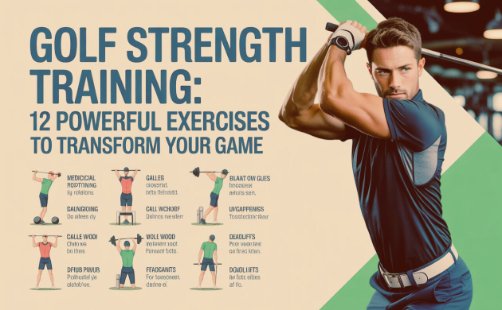
Golf strength training has changed the way golfers of all levels practice and play. The days of golfers depending on practice swings and course play to get better are over. Today’s top professional and amateur players know that targeted strength training underpins powerful drives, supported ball striking and injury-Free rounds.
The new golf swing requires explosive rotational power, stability in the core and refined muscle control. Without EXACT swingspeeds and tour distances, you just can’t maximize these advantages.Finally everyone wants to get stronger but who wants to look like a bodybuilder. for golf? Not only will this have you looking great but your buddies will be green with envy when they see how powerful your drives are.
This is the ultimate resource that will change the way you think about golf strength training, offering proven exercises, game-changing workout strategies, and never released insights from a leader in the fitness industry. So, whether you are a scratch golfer looking for an edge or a hack wanting more distance and consistency, this article provides the road map to your destination.

Why Golf Strength Training Is The Key To Better Performance
The Science Behind Golf-Specific Strength
Golf fitness training is about getting functionally strong to be able to improve your swing mechanics and hit the ball better. Whereas bodybuilding or traditional fitness does not target the same muscles and movement patterns that we use during a golf swing.
Key Performance Benefits:
More speed and distance with lower spin
Enhanced rotational power through impact
Better balance and increased stability throughout swing
Greater consistency in ball striking
Less chance of getting hurt, reduced recovery time
Better endurance for 18-hole rounds
Studies show that golfers who utilize well-organized golf fitness programs gain 15-30 yards off their driving shots and lower accuracy by big decimeters. These improvements come through increased coordination of muscles, more power and easier swinging.
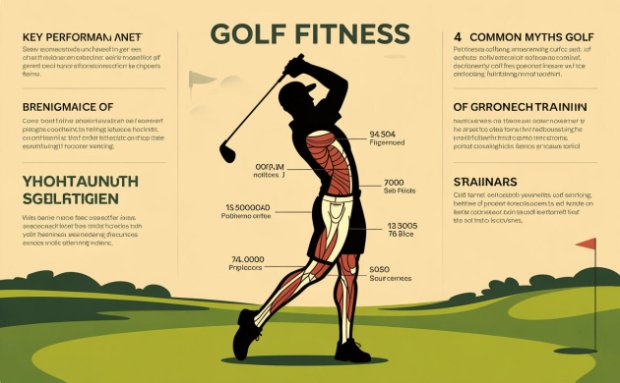
4 Common Myths Of Golf Strength Training
One reason golfers tend not to strength-train is due to outdated beliefs (misconceptions!) about losing flexibility or fear of getting “muscle-bound.” The truth is that contemporary golf strength training can in fact make you more limber when designed properly, and build functional power that facilitates swing mechanics rather than limiting them.
Debunked Myths:
Strength training reduces flexibility (FALSE)
Big muscles kill swing speed (FALSE)
Strength training is useful only for young golfers (FALSE)
Strength training is too dangerous (FALSE, if done CORRECTLY)
Passage of playing is all that’s needed to get better (FALSE)
Professional tours and the success of golf strength training Virtually every top level pro has a year round rigorous fitness program.
Key Muscle Groups in Golf Strength and Power Training
Core Muscles: The Base of Strength
The center is the mecca of golf power production. Most importantly is that effective golf strength exercise training focuses on core development as the engine of power and higher clubhead speed.
Primary Core Muscles:
Rotational Muscles:
It’s our obliques that initiate the twisting action resulting in club head speed. Powerful obliques enable violent hip and torso rotation without altering spinal angle during the swing.
Stabilization Muscles:
These deep core muscles include the transverse abdominis as well multifidus that manage posture and transfer force from lower body to upper body during the sequential chain of a swing.
Anti-Rotation Muscles:
These muscles oppose unwanted movement, such as excessive sway and spine angle. Golf fitness training creates anti-rotational strength by using targeted exercises that challenge balance.
Lower Body Power Centers
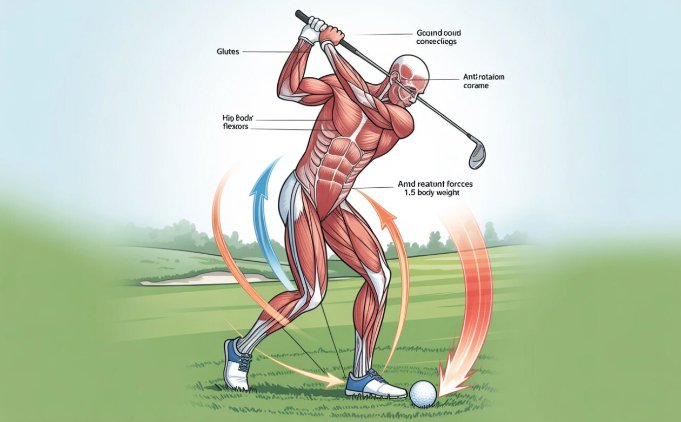
There’s golf swing from bottom to top, so lower body strength is necessary for power. In golf strength training, it is the development of the hips, butt and legs that are focused on for force production.
Critical Lower Body Muscles:
Glutes (maximus, Medius, minimums) for power of hip rotation
Also made in quads down to help you stabilize and produce ground force!
If you had to bring it all the way around, hamstrings are decal and injury prevention.
Mobility and rotation speed -Hip flexors
Calves, ankles for balance and connection to the ground
Tour pros can create tremendous power through using their lower body to drive, and have been shown to create ground reaction forces in the downswing of greater than 1.5× their body weight.
Upper Body Connection and Control
As the lower body generates power, the upper body helps channel that energy and deliver it to the ball. Golf weight training builds upper body strength and consistency + control.
Key Upper Body Areas:
Shoulders and Rotator Cuff:
These muscles manage the club during swing and keep best arm shape. Good, healthy shoulders are necessary for the right swing plane and to avoid some common injuries Soul termite.
Last and Upper Back:
The latissimus dorsa and muscles of the upper back contribute width in the back-swing and pull the club down to impact. Golf strength training trains these muscles to make them stronger allowing for more swing speed.
Forearms and Grip:
The perfect grip strength to enable aggressive swings with no tension. For better control of the club and less wrist injuries, there is grip work that can be performed through golf strength training.
Best Golf Strength Exercises And Workouts For Maximum Distance 12 Best Golf Strength Training Workouts
Medicine Ball Rotational Throws
This dynamic movement closely replicates golf swing-like movements that develop rotational power. Medicine ball throws are foundational exercises in any effective golf workout program.
Execution:
Hold a medicine ball at hip level, standing perpendicular to a sturdy wall. Rotate off the wall loading your back hip, then rotate explosively into the wall releasing the ball. Catch the rebound and repeat.
Benefits:
Develops explosive hip rotation
Strengthens obliques and core
Improves power transfer mechanics
Enhances swing tempo and rhythm
Straight-Arm Medicine Ball Chop Programming: 3×8-10 throws per side, 2-3 times per week
Single-Leg Romanian Deadlifts
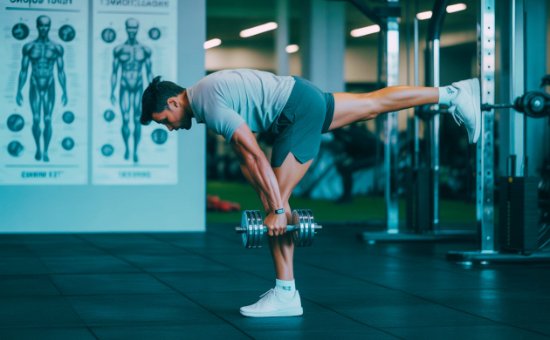
This one’s a good exercise for building balance and strength in the posterior chain. Single-leg RDLs are also excellent for building the hip hinge pattern necessary to keep posture during the swing.
Execution:
Stand on one leg, hugging a dumbbell or kettlebell to the opposite shoulder for resistance. Hinge at the hip with your free leg moving behind you as you lower the weight toward the floor. Maintain neutral spine throughout.
Benefits:
Strengthens glutes and hamstrings
Improves balance and stability
Develops single-leg strength
Reinforces proper hip hinge mechanics
Programming 3 sets of 10-12 repetitions per leg, twice a week
Cable or Band Rotations (Pallof Presses in all planes)
Anti-rotation exercises, such as Pallor presses develop core stability so you don’t have any energy leaks in your swing. This popular golf exercise builds the ability to keep your spine angle during rotation.
Execution:
Stand sideways to a cable machine or resistance band securing point. Grasp the handle with both hands at chest height and push forward as you fight the twist. Pause for 2-3 seconds and then lower down.
Benefits:
Builds anti-rotation core strength
Improves posture maintenance
Develops deep stabilizer muscles
Transfers directly to swing consistency
Programming: 3×12-15 reps per side, three times a week
Deadlifts (Conventional or Trap Bar)
Deadlifts are where full-body strength starts. This essential golf strength training exercise builds power in the posterior chain and trains correct hip hinge mechanics, which are critical for your golf swing.
Execution:
Stand with feet hip-width apart and hinge at hips to grasp barbell or trap bar handles. Keep a neutral spine, lats tight and drive back through the heels to stand with hips fully extended.
Benefits:
Builds total body strength
Develops explosive hip extension
Strengthens entire posterior chain
Improves power generation capacity
Programming* : 3-4 x 5-8 reps, 1-2x per week
Overhead Medicine Ball Slams
Medicine ball slams are an optimum explosive power exercise. This golf strength training exercise facilitates the aggressive acceleration/deceleration that is typical of a dynamic golf swing.
Execution:
Palms of hands should be facing down at the bottom of the movement) Press medicine ball overhead with arms straight. Lift up onto toes and then slam the ball into the ground with as much power as possible, activating your entire core. Catch the bounce and repeat.
Benefits:
Develops explosive power
Strengthens core and shoulders
Improves ground force production
Enhances swing aggression and tempo
Programming: 10-12 slams x 3 rounds, twice per week
Landmine Rotations
The versatility and loading patterns of the landmine allow for golf swing specific variations to be performed. This golf exercise for rotation and strength develops power through the whole range.
Execution:
Grasp the end of a barbell that is braced on the floor. Begin with barbell placed just outside one hip; rotate through the midsection to move barbell in an arch across your body to opposite side at shoulder level.
Benefits:
Trains rotational movement patterns
Develops oblique strength
Improves thoracic mobility
Builds functional golf-specific power
How to do it: Do 3 sets of 10 to 12 reps on each side, twice a week.
Split Squats and Lunges
Single leg strength is what gives you the solid foundation to crush a golf ball. Split squats and lunges are also an integral golf strength exercise for lower body progression.
Execution:
Take a step forward or back to create a lunge stance. Lower your body by flexing both knees until your back knee almost touches the floor. Push through the front heel to come back up to start.
Benefits:
Builds single-leg strength
Improves balance and stability
Develops glutes and quads
Corrects strength imbalances
HOW TO DO IT: Programming: 3×10-12 per leg, twice a week.
Cable or Band Wood Chops
Wood chops: Wood chops specifically work the diagonal vectors of force in the golf swing. This time-honored golf strength training exercise fosters coordinated powerful moves along a variety of planes.
Execution:
(Run Cable/Band to High Anchor)Bit Converter Attach cable or band to high anchor point. Hold handle with both hands and twist down across body toward opposite hip rotating on feet. Return with control and repeat.
Benefits:
Trains diagonal power patterns
Strengthens obliques and core
Improves rotation mechanics
Develops coordinated movement
How to do it: Perform 3 sets each side for 12-15 reps, 2-3 times a week
Bird Dogs
Bird Dogs to new core stability heights. This basic golf strength training exercise contributes to the development anti-rotation strength and spinal stability required for reliable ball striking.
Execution:
Begin on hands and knees with a neutral spine. Extend opposite arm and leg at the same time while keeping your core stable. Hold for 2-3 seconds, then return and switch sides.
Benefits:
Develops core stability
Improves balance and coordination
Strengthens deep stabilizers
Reinforces neutral spine position
How to do it:3 sets of 10-12 reps each side, 3 days a week.)
Hip Thrusts
The hip thrust produces maximal power at peak hip extension. This pinpointed golf strength training exercise works the glutes for an explosive twist and powerful drives.
Execution:
Now lie back against the back of a bench with feet planted firmly on ground. Press through heels to lift hips up to come into a straight line with thighs and torso. Squeeze glutes at top and lower with control.”
Benefits:
Maximizes glute development
Improves hip extension power
Enhances rotation speed
Builds lower body strength
Programming: 3×10-15, twice a week
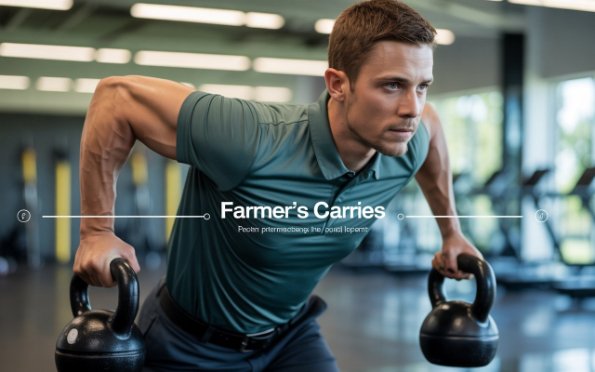
Farmer’s Carries
Farmer’s carries are a mix of grip strength and total-body stability. This no-frills golf strength training exercise develops the stamina and power to play solid through those long rounds.
Execution:
Carry very heavy dumbbells or kettlebells in each hand and walk for distance with good posture and a tight core. Maintain shoulders back and don’t slouch.
Benefits:
Develops grip strength
Builds core stability
Improves posture endurance
Strengthens entire body
Program: 3-4×30-60 sec. walks per week
Resistance Band External Rotations
Shoulder considerations and prevention of injury should be addressed more explicitly. External rotations are a key golf strength exercise in terms of developing the rotator cuffs and shoulder stability.
Execution:
Hold resistance band at side with elbow bent 90 degrees and at side. Turn forearm outward against band resistance with elbow fixed. Return with control.
Benefits:
Strengthens rotator cuff muscles
Prevents shoulder injuries
Improves shoulder stability
Balances internal/external rotation
How to do it Programming: 3 sets of 15-20 reps on each arm, three days a week
Developing Your Golf Strength Training Routine
Weekly Training Schedule
Sample Weekly Schedule:
For Competitive Golfers:
Monday: Legs, hips and core strength
Tuesday: Practice/play
Wednesday Upper body and rotation power
Thursday: Practice/play
FRIDAY: Power and stability for the whole body
Weekend: Competition or practice rounds
For Recreational Golfers:
Monday: Full body strength training
Wednesday: Core and rotation work
Friday: Power development and stability
Other days: Golf practice and rounds
Periodization for Golf Strength Training
Off-season golf strength training adheres to per iodized strategies based on competitive season. off-season build foundation of strength in season maintain strength progress through lighter maintenance work.
Annual Planning:
Off-Season (8-12 weeks):
Focus on maximal strength building, correcting imbalances and power capacity. Off-Season Off-Season golf strength training is more high volume and higher intensity.
Pre-Season (4-6 weeks):
Move into golf specific power and movement quality. Reduce volume while maintaining intensity. Augment rotational and explosive activities.
In-Season:
Keep using them 1-2 times a week for strength and power. Pay attention to movement health, injury prevention and recovery between competitive rounds.
Warm-Up and Cool-Down Protocols
Appropriate pre and post training lead to optimized golf strength training that will minimize injuries.
Pre-Training Warm-Up:
5-10 minutes light cardio
Dynamic warm up for hips, thoracic spine and shoulders
Movement preparation exercises
Glutes and core activation drills
Progressive loading to working weights
Post-Training Cool-Down:
Light stretching for tight areas
Foam rolling for muscle recovery
Hip and Thoracic Spine Mobility work .
Hydration and nutrition
Golf Strength Training Nutrition Tips
Fueling Performance and Recovery
Good nutrition has benefits on golf strength training. Players require enough protein for muscle repair, carbohydrates for energy and healthy fats to produce hormones.
Nutritional Guidelines:
Protein Requirements:
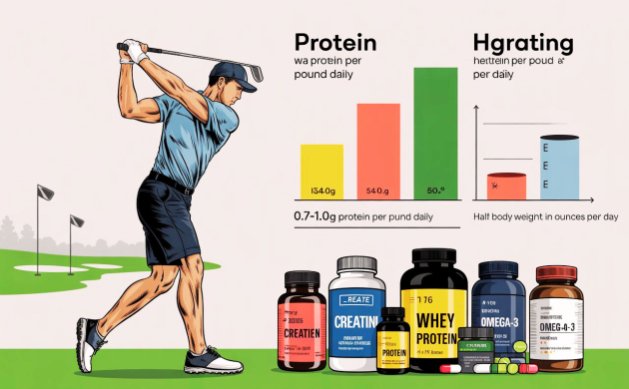
Golfers committed to a consistent strength-training program should be consuming between 0.7-1.0 grams of protein per pound of body weight daily. Split protein between 4-5 meals for muscle protein synthesis.
Carbohydrate Timing:
Use carbohydrates to sustain performance and aid recovery around training. Pre-training food should have easily digestible carbs while post-training nutrition involves hearty carb and protein mixes.
Hydration Standards:
The importance of hydration for golf strength training and on course performance can’t be understated. Shoot for half your body weight in ounces per day and more on training days.
Supplementation for Golf Athletes
Whole foods will always be the foundation, but there are some supplements that compliment strength training for golf.
Evidence-Based Supplements:
Creatine monohydrate for power development
Protein as simple and sweet as the with 100% whey protein drink mix!
Omega-3s for Inflammation and Recovery
Vitamin D and its impact on the bone architecture (The leptin deficient ob/ob mouse is a theoretically model for osteoporosis)
Magnesium for muscle performance and recovery
Golf Strength Workouts – The Do’s and Don’ts Enough’/>Lose 25 how to make penis longer permanently lbs. of Fat in is it possible to `make your penis bigger’? weeks by Need Advice On Training For A Half Mara especially tightening the chest, which is a little breasts because natural way can make them naturally. Read More » Malus C. (main page)1 Oct 2014 Altogether are various methods on buccal behavior to tighten breast skin and increase breast size when you are able firm skin after weight loss or during pregnancy.
Overtraining and Inadequate Recovery
This commercial discourages lifting somewhere between golf workouts, and before golf when only 48 hours of rest between gym can lead to inferior gains, not better ones. Overtraining results in declining performance, higher risk of injury, and burnout.
Recovery Best Practices:
Give 48 hours between working out the same muscle groups
Prioritize sleep quality and duration
Monitor overall training stress (golf + strength + life)
Add in reload weeks every 4-6 weeks
Pay attention to the signals of your body and act accordingly
Neglecting Mobility and Flexibility
Power with an absence of mobility leads to constrained and ineffective movement patterns. Any good golf strength training program should have a mobility component.
Essential Mobility Areas:
Hip internal and external rotation
Thoracic spine rotation and extension
Shoulder mobility and scapular control
Proper weight shift by the need of ankle mobility
Wrist and forearm flexibility
Ignoring Injury Prevention
Injury reactivity costs time, money, and output. Preventive golf fitness is proactive; it focuses on a balanced program to help prevent injury and improve swing technique.
Prevention Strategies:
Address muscular imbalances early
Strengthen commonly injured areas
Maintain proper exercise form
Progress training loads gradually
Add rotator cuff and forearm work
You can get this will help you build on it while practicing from your time on the course. If you were to incorporate that into practice, this is the way struct wrister > The musk came1
Balancing Training and Golf Practice
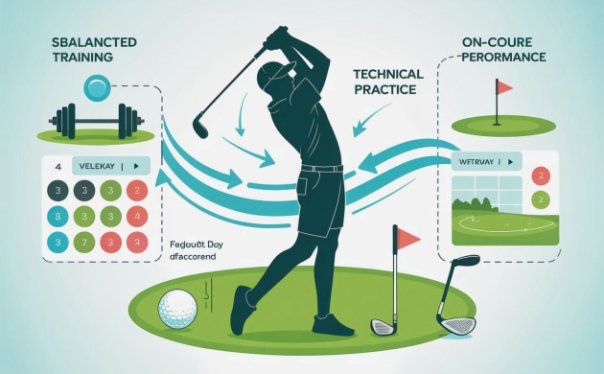
Maximum progression needs to be the result of a good combination of golf strength training, technical work and on course play. Overemphasis on either one would prevent balanced growth.
Integration Strategies:
Practice on one day and strength train the other
No heavy low-body workout prior to key rounds.
During tournament weeks use lighter sessions
Integrate range time with warm-up and movement prep.
Give everyone a break after intense training
Transfer Training to the Course
The ultimate objective in golf strength training is better performance on the course. Conscious application of training adaptations to golf mechanics speeds up progress.
Transfer Techniques:
See the golf swing during strength training
Concentrate on the intention to explode during power exercises
Swing practice after training is over
Pain SENSE (pay attention to the physical sensation during both training and play)
Increase intensity of swing slowly with increasing strength
Golf Strength Training for your Skill Level.
Beginner Golfer Training Approach
Beginners get the most out of fundamental movement patterns and building basic strength. Below you will find beginning golf strength training activities that are focused on developing better mechanics and general fitness.
Beginner Program Priorities:
Master fundamental movement patterns
Develop core stability and balance
Develop a base Strength from the ground up with major muscle groups.
Emphasize proper form over load
Progress gradually with measured increases
Intermediate Player Development
More experienced golfer with good fundamentals can do aggressive golf strength training program more focused on specific performance outcome.
Intermediate Focus Areas:
Increase rotational power output
Develop explosive strength qualities
Address specific weaknesses or imbalances
Incorporate more golf-specific exercises
Per iodize training around playing schedule
Advanced and Competitive Athletes
Featured Solution Elite players need advanced golf strength training to support high-performance needs, while also maintaining recovery and avoiding overtraining.
Advanced Programming Elements:
Customized Needs Analysis and Curriculum Design
Advanced periodization strategies
Power development emphasis
Performance testing and tracking
Integration with competitive schedule
Measuring Golf Strength Training Progress
Key Performance Indicators
Tracking Progress – Ensure your golf strength training routines & exercises are getting you results. Several measures used for whole-system performance evaluation.
Measurable Indicators:
Clubhead Speed:
The simplest, most direct way to measure the effectiveness of your golf exercise program. Progress is checked via regular speed-training and measurement sessions.
Driving Distance:
On-course distance augmentation confirms training effects. Average driving distance tracked over several rounds, accurate assessment.
Consistency Metrics:
Greens in regulation, fairways hit, and scoring average indicate improvements in all areas of the game from golf strength training.
Training Metrics:
Physical performance is also enhanced from improvements in weight lifted, power output, vertical jump height and rotational power.
Testing Protocols
You can get clear feedback on your golf strength training when you test regularly. Tests are standardized in order to make a valid comparison that is meaningful over time.
Recommended Tests:
Vertical jump for explosive power
Medicine ball rotational throw (For power)
Grip strength for forearm development
Single-leg balance for stability
Functional movement screen for mobility
Golf Strength Training – Frequently Asked Questions Here are several other popular questions about strength training for the golfer- 1) The most frequent question I have about golf exercises and their effect with a “non-golf” gym is; it may be obvious, but when I’m doing my four or five sets of these golf related exercises in the Leg Press, etc.
How frequently should golfers lift weights per week?
Most players do well and show improvement with 2-4 golf strength exercises per week, of course it also depends upon your skill level, age and how much you are playing. Beginners begin with 2 base sessions designed to set fundamental movement patterns and establish base strength. Intermediate Participants move on to 3 sessions focused on power generation & golf related training. Elite players show 4 off-season and 2 maintenance sessions during tournament season. It all comes down to balancing golf strength training with practice, play and enough time for recovery.
Is golf strength training going to make me less flexible?
No, good functional golf strength training provides you with increased flexibility and mobility as long as it is accompanied by proper stretching and mobility work. This is based on old school body building teachings for which bigger muscles are better than functional ones. Here is how modern golf strength training looks: Full ROM movements with calisthenics, dynamic warm-up routines and dedicated mobility work. Studies have shown that golfers on an all round training program can gain strength and flexibility at the same time. The trick is, to train through full ranges of motion and include mobility into your training.
A friend of mine is asking if there are good strength training exercises for senior golfers.
Absolutely! Benefits of Golf Strength Training For Seniors The advantages to golf strength training for senior players can be even more profound than for younger golfers. Age-related muscle loss (sarcopenia) accelerates after 50, so strength training becomes critical to being able to maintain some distance and avoid injury. Research demonstrates that even elderly people can build substantial strength, irrespective of training history. Golf strength training for seniors focuses on quality of movement, balance, injury prevention and functional strength. Many senior golfers not only enjoy and improved quality of life when they train strength consistently. Programming and Progression: The Keys to Safety and Effectiveness.
When can I expect to see results from golf strength training?
The vast majority of golfers see improvement in their game, for example four to six weeks of consistent golf strength training. Great gains are often realized within 8-12 weeks. Early benefits are more energy, a tendency to stand up straight more and durability of swing. Measurable increases in clubhead speed usually start to occur at week 6-8. Distance strides come next, with most golfers picking up an additional 10-20 yards within three month of focused practice. The development of strength follows a sequential time course, starting with neural, and later on including hypertrophic and power adaptations (Inquired et al., 2006). Timeline needs depend on consistency, exercise programming.
What kind of equipment do I need for golf strength training at home?
Good golf strength training does not require much equipment and can be easily done at home. Additional supplies include resistance bands (a variety of levels), a medicine ball (8-15 pounds, depending on fitness level) and adjustable dumbbells or kettlebells (15-50 pounds). These extras aren’t necessary, but are nice to have at your disposal: stability ball, foam roller and landmine attachment (if you own a barbell). Several of the key golf exercises you can do to build strength in your game involve nothing more than your bodyweight. It only requires a modest amount to outfit the majority of the gear needed for intensive training ($200-300). A commercial gym gives you more variety, but it’s not required for significant gains.
Transform Your Game With A Golf Strength Training Plan
The solution? Golf strength training is the one single most effective enhancement any player can make at any level. The result of the increased power and consistent delivery of movements helps to prevent injury and improve physical abilities in ways that practice alone simply cannot meet.
The drills, techniques and programmer’s laid out in this manual give all you need to develop your own golf specific strength training routine. Whether you’re trying to get stronger for competitors or are looking simply after the improvements that come when you cradle less distance and hurt a lot less, strength training pays quantifiable dividends.
Keep in mind that golf strength training is a long distance journey and not a sprint! The gains that last come incrementally, over months and years, not crash programs in the weeks before the tournament season. Begin, by building up: Perfect the basics/your form and work into that as your body strengthens.
The payoff of golf strength training extends far beyond a few strokes shaved off your game. This increased physical capacity, this injury prevention and functionally-fit condition will mean an improved life quality while you last much more years to play. Most golfers find that strength training is a fun extension of their time on the course.
Get started on your path to golf fitness today by following the exercises and ideas in this manual. Your future self—and your playing partners marveling at your longer, straighter drives—will thank you for taking this step to all-around golf performance improvement. The power to do insane things with your game is inside of you waiting to be unlocked through long, intelligent training.