
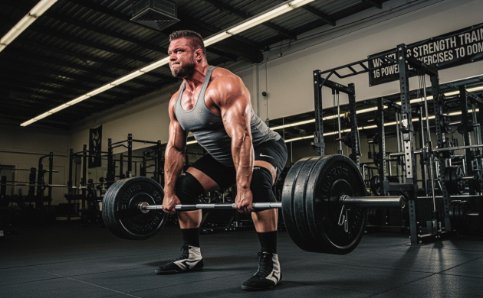
Wrestling strength training has become the difference maker that separates champions from competitors on the mat. High-performance wrestlers understand that it takes more than just technique to make you dominate on the mat. You need insane power, explosion, ridiculous conditioning, and functional strength built from a structured resistance training program made for wrestling.
The nature of wrestling makes some of its competitors go far beyond their physical limits. Matches demand relentless, full body exertion and explosive take downs. Grinding top control and never-say-die escapes are all done as an equally tenacious opponent does the same. Without effective wrestling strength workouts, athletes struggle to stay intense during matches and perform techniques against resistance. They defend themselves in ways that often sideline under prepared grapples with injuries.
This complete program exposes the fundamental exercises, programming schemes, and training concepts that produce elite level wrestlers. You will finally see how wrestling strength training turns technique into DOMINANCE and builds the injury-proof body required to succeed on the mat over the long term.
How Wrestling Strength Training Creates Champions
The Combat Sports Advantage
Wrestling strength training directly addresses the unique physical needs of fighting on the mats. Contrary to traditional strength training, wrestling-specific training enhances explosive power, muscular endurance, grip strength, and core stability needed to apply techniques against resisting opponents.
Performance Enhancement Benefits:
• More powerful Exploded Take down and Finishing moves
• Improved top position control opportunity
• Increased escape-and-reversal explosiveness
• More stamina for full-match intensity
• Decreased potential for injury from high-impact exercises
• Greater physical endurance in overtime periods
Research shows that wrestlers using organized wrestling strength training programs perform at a much higher level than peers who just spend time on the mat. These enhancements are due to increases in neuromuscular power, muscular endurance and greater body control during fatigue.
The Science of Grip Strength
Functional, what specific movements in this match? Exercises focus on the same multi-jointed actions, rapid application of force, grip-strength endurance and ability to apply force from compromised positions — precisely what occurs in a live wrestling match.
Key Training Principles:
• Complete body integration as opposed to isolated movements.
• Take down explosive power development
• Muscular endurance for effort over time.
• Wrist strength for controlling opponents
• Core stability for holding position
• One-sided power for balance and strength
3) Wrestling strength training despite their vast differences in style, elite wrestlers everywhere spend between 3-5 hours per week in the weight room because they understand that technique hits a wall without adequate physical preparation.
Importance of Muscle Groups in Wrestling Strength Training
Proper wrestling strength training can significantly impact performance, reducing injury risk and enhancing overall effectiveness on the mat.
In wrestling, the demands are high, and so is the need for proper training. A wrestler’s strength must be supported by agility and endurance, making a well-rounded strength training plan essential.
The ‘Posterior Chain’: You’re Power Plant
It is your posterior chain that gives you dominance in wrestling. Good wrestling weight lifting will emphasize explosiveness from gluts, hamstrings, and your entire back musculature that is necessary for you to physically lift an opponent off the mat and apply grinding top pressure.
Posterior Chain Priorities:
G lutes and Hips:
Hip extension power is the push you use to step through on a penetration, sprawl, and on mat returns. Powerful gluts facilitate level changes necessary for high-percentage take downs.
Hamstrings:
These are the deceleration muscles that save you from injury during scrambles and they add to power stance work and leg attacks.
Spinal Erectors and Last:
Strong back muscles represent good posture in tie-ups as well as the pulling power needed for throws, snaps and mat returns.
Core: The Control Center
The ability to hold position and scramble is controlled by core strength. Total wrestling strength training creates 360 degree core balance that allows wrestlers to maintain positional advantages.
Core Training Focus:
• Anti-extension bottom position strength
• Anti-rotation rigidity to control the plane
• Flexion • Strength – sit outs and switches.
• Side-to-side strength for hip movement
• Rotational power for throws to turns
Championship wrestlers never leave their core exposed during a six-minute match, stalling or allowing for position breakdowns that result in points and even loss of the match.
Upper Body Grappling Strength
And tie-ups, take downs and pins are a product of top body strength. When it comes to wrestling strength training, better pulling power, grip endurance, and shoulder stability is the key.
Key Upper Body Areas:
Grip and Forearms:
Bad guys are nothing more than vices needed for grips. All poor hand grips (including thumbs) directly affect wrestling action from hand control to riding time.
Shoulders and Upper Back:
The ability to have strong collar ties, under cooks and overlooks is a product of shoulder strength. Upper back development generates the pulling strength for snaps and drags.
Chest and Triceps:
And strength is what lets you generate space, hold the cross-faces and drive through your opponent’s frame when he’s playing defense.
Lower Body Power and Flexibility
Prow wrestling, requires quick explosive lower body strength as well as superior mobility. Wrestling strength training builds legs that can generate power from deep stances yet remain nimble.
Lower Body Training Priorities:
• Quads for drive step quickness – penetration step explosiveness
• Hip flexors /leg attacks/ sprawls
• Abductors/tripod for stability in stance and mobility
• Calves, to keep balance and move your feet rapidly
Ankle Strength for Mat Mobility
The 16 Best Wrestling Strength Training Exercises
1. Dead lifts (Conventional and Sumo)
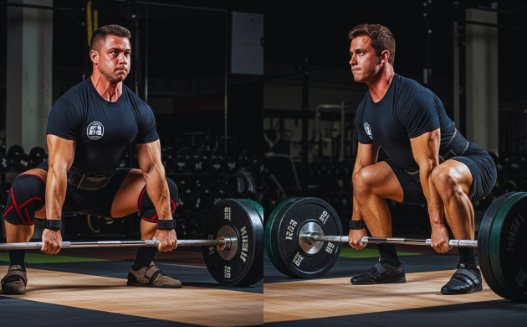
Dead lifts are the foundation of total body strength. This base wrestling strength exercise will help you develop the critical posterior chain power needed for controlling wrestling.
Execution:
Stand with your feet hip (conventional) or wide (sumo). Bend at the waist to reach the barbell. Keep Spine neutral, last engaged and drive through heels while extending hips to stand.
Wrestling Benefits:
• Builds explosive hip extension
• Strengthens entire posterior chain
• Develops grip endurance
• Increase the pull for throws
Programming: 3-4 sets of 3-6 repetitions, twice per week
2. Heavy Sled Pushes and Drags
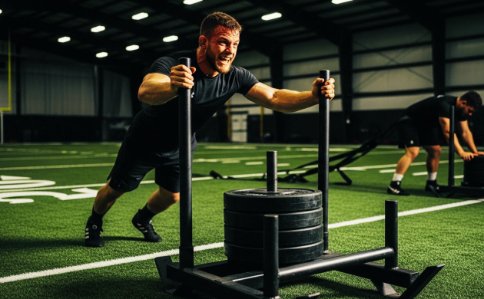
Power and conditioning on the ground combines into sled work. If you want to get specific in your wrestling strength training, these are the exercises for you.
Execution:
Push: Hands on uprights, drive sled forward, keeping forward lean and strong leg drive.
Drag: Pull sled with rope or harness stepping backward in a strong, controlled fashion.
Wrestling Benefits:
• Develops stance-specific leg power
• Builds muscular endurance
• Improves mat mobility patterns
• Provides low-impact conditioning
Programming: 4-6 x 20-40 yards, twice a week
3. Pull-Ups Variations (Wide, Close, Weighted)
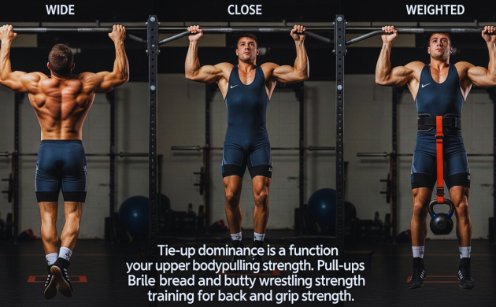
Tie-up dominance is a function of your upper body pulling strength. Pull-ups are bread and butter wrestling strength training for back and grip strength.
Execution:
Multi-grip bar. Pull body up until chin passes bar, lower with control. Add weight for increased difficulty.
Wrestling Benefits:
• Develops primary pulling muscles
• Builds grip endurance
• Strengthens last for snap-downs
• Improves body control
Programming: 4-5 sets to what you can sustain, twice weekly
4. Searcher Squats
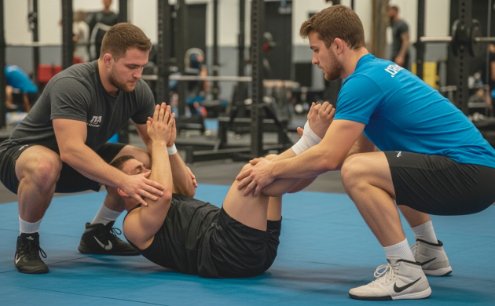
This specialized squat variation replicates wrestling scenarios and can help to develop an amazing core and lower body strength. Wrestling Specific Searcher Squats are Key To The Throwing Games.
Execution:
Place a barbell in the crook of your elbows chest high. Lower into a squat, keeping chest up and out, then press through heels to stand.
Wrestling Benefits:
• Develops wrestling-specific positions
• Firms core and upper back
• Develops leg strength in deep position
• Improves carrying strength
Programming: 3-4×6-10; 1-2x/week
5. Medicine Ball Slams and Throws

Med ball work is the end point of explosive power development. These dynamic drills are great for complementing your wrestling strength training by incorporating total body power exercises.
Execution:
Slams: Hold ball over head, Slam as hard as possible on ground utilizing the whole body.
Throws: explosively throw ball against wall/passer at different angles and body positions.
Wrestling Benefits:
• Develops explosive full-body power
• Improves hip extension speed
• Builds finishing strength
• Enhances core engagement
Programming: 4×8-12, 2 days per week
6. Turkish Get-Ups

Try a Turkish get up for total body integration + position changes in yoga = STRENGTH. This is a complicated move that can give great wrestling strength training results.
Execution:
Lying on back, weight is held overheard. Keep overhead weight control if is more easy change to side- lying>seated> kneeling STANDING position with in series.
Wrestling Benefits:
• Develops total body coordination
• Builds shoulder stability
• Improves ground-to-standing transitions
• Strengthens core and stabilizers
Programming: 3×3-5 per side, 1-2 times per week
Loaded carries develop grip endurance and postural strength. These simple and devastating drills will increase your wrestling strength training significantly.
Loaded carries develop grip endurance and postural strength. These simple and devastating drills will increase your wrestling strength training.
Execution:
Hold heavy objects in each hand (dumbbells, kettle bells, farmers walk handles). Stroll for distance with the chest up and core braced.
Wrestling Benefits:
• Builds exceptional grip strength
• Develops postural endurance
• Strengthens entire body
• Improves mental toughness
Programming: 40-60 yards x 4 sets, 2x per week
8. Rope Climbing
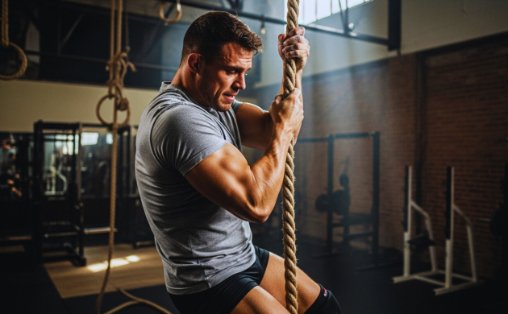
There’s not many exercises that can develop more wrestling-specific upper body strength than rope climbing. This old school wrestling strength exercise trains functional pulling power.
Execution:
Use the legs to climb, arm over arm or “legless” for more of a challenge. Control descent preventing rope burn.
Wrestling Benefits:
• Develops exceptional grip strength
• Builds pulling power
• Strengthens entire upper body
• Enhanced body control and coordination
Program Directions: Perform 3-4 sets of 2-4 climbs, 1-2 times per week
9. Bulgarian Split Squats
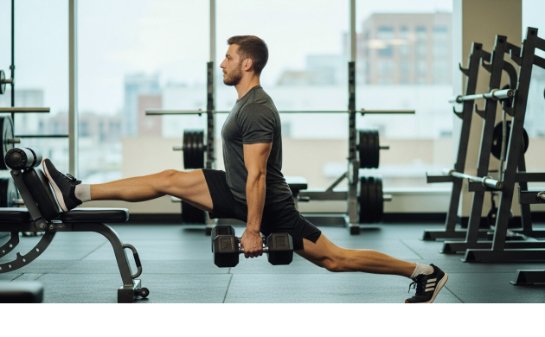
Strength for a brace, as well as single leg stability are key here with the stance and sprawls. The Bulgarian split squat meets these requirements for your wrestling strength training.
Execution:
Rear leg on bench (behind you) Bend front leg to lower body until knee is just above floor. Press through heel to stand up.
Wrestling Benefits:
• Develops single-leg strength
• Improves stance stability
• Builds powerful legs
• Corrects strength imbalances
Programming3×8-12 per leg, twice a week
10. Landmine Rotations and Presses
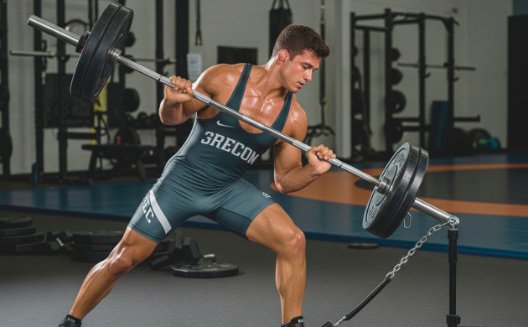
Rotation power and overhead strength in landmines exercises. These actions have specific advantages for strength training for wrestling.
Execution:
Grip end of barbell down to floor level. Twisting barbell across body or pressing overhead in shift positions.
Wrestling Benefits:
• Trains rotational power via throws
• Builds overhead strength
• Strengthens core and shoulders
• Improves explosive capacity
Program 3 x 8\-12 reps each leg \(2 days per week\)
11. Box Jumps and Depth Drops
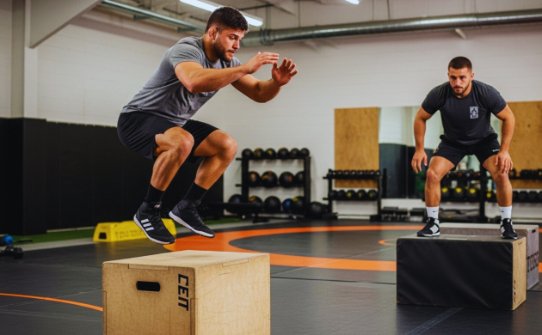
Your downward explosiveness also turns into your penetration steps and sprawls. Wrestling strength training gets a boost with psychometric: reactive strength psychometric training.
Execution:
Box Jumps: Jump explosively onto stable box, land lightly, step down.
Depth Drops: Step off box, absorbing force and landing softly, then jump upward.
Wrestling Benefits:
• Develops explosive leg power
• Improves reactive strength
• Enhances athletic movement
• Builds take down speed
Programming: 3-4 sets x 5-8 jumps, 1-2 x per week
12. Sandbag Shouldering and Carries

Hugging odd objects on the floor develops functional strength, used when you are in a hugging match to gain control over him. Sandbag training offers some unique benefits for the wrestler who strength trains.
Execution:
“Ground to shoulder sandbag with hip explosion. Cool down with a walk or some sandbag lifts.
Wrestling Benefits:
• Develops functional lifting strength
• Both support and hand stability on unstable structures
• Improves explosive power
• Strengthens entire body
*Programming: *3-4×5-8 shoulders, 1x per week
13. Ab Wheel Rollout
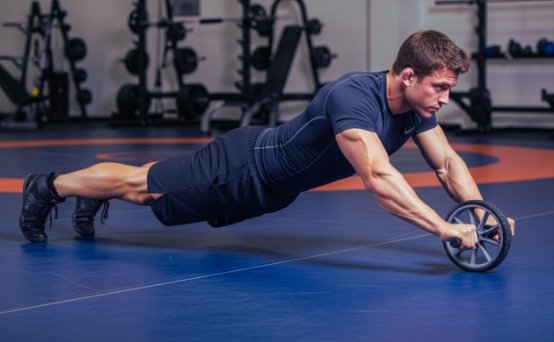
Ab wheel rollout bring core strength to new heights. This is an advanced exercise that is great for wrestling when it comes to strength training the anterior core.
Execution:
Kneel with hands on ab wheel. Roll wheel out in front of you away from body keeping spine neutral. Recover to begin utilizing core strength.
Wrestling Benefits:
• Develops anti-extension core strength
• Builds bottom position strength
• Strengthens entire anterior chain
• Improves postural control
Programming 3-4 sets of 8-15 reps, 2-3 times per week
14. Battling Ropes
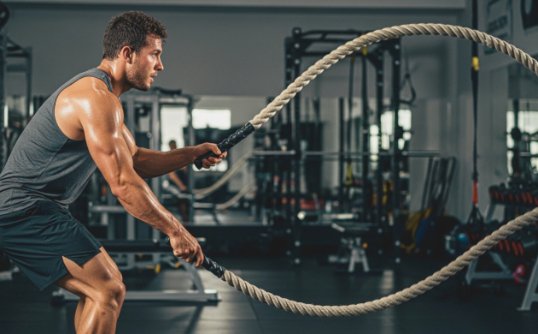
Rope training combines upper body power endurance and conditioning. These tuber-metabolically expensive exercises make great additions to wrestling strength training programs.
Execution:
Grab one end of battle rope in each hand. Make waves with your arms (alternate them, double arm waves, circle them).
Wrestling Benefits:
• Develops power endurance
• Develops grip and forearm strength
• Improves conditioning
• Enhances mental toughness
Programming 4-6 x 20-40s hold, 1-2x / week
15. Inverted Rows
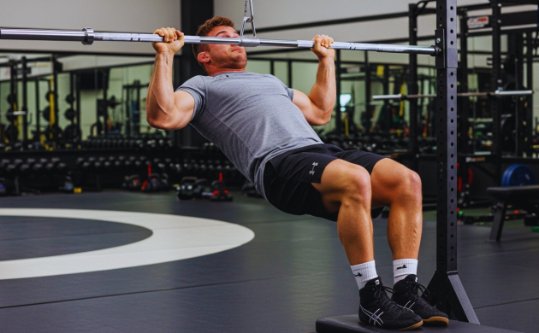
The other end, on the horizontal pulling strength is what’s going to help with tie-up dominance and top position control. Inverted rows offer scalable strength training for wrestlers at every level.
Execution:
Position yourself under bar secured at waist level. Pull chest up to bar. Keep body tight and straight. Lower with control.
Wrestling Benefits:
• Develops horizontal pulling power
• Strengthens upper back
• Builds grip endurance
• Improves body control
Programming: 3-4 sets x 10-15 reps, 2 days per week
16. Sprawl Bur pees

Conditioning just for wrestlers is combined with pure strength training with sprawl bur pees. The composite exercise offers great sport-specific advantages.
Execution:
From Stand to Sprawl, Push-Ups, Up and maybe Jump. Repeat with intensity.
Wrestling Benefits:
• Proposes fatigue-based sprawl mechanisms
• Builds explosive hip extension
• Improves conditioning
• Strengthens entire body
Programming Note: Do 4-6 sets of 10-20 reps, once or twice per week
##Programing Wrestling Strength Training through the season
Off-Season Strength Development
The off-season is when maximum strength should be developed. The primary focus of your wrestling strength training during this phase is on progressive overload and volume building.
Off-Season Training Focus (12-16 weeks):
• Maximum strength & power building (3-6 rep ranges)
• Increased volume of training (4-5 exercises per session)
• Slower pace and concentrate on form
• 3-4 strength sessions weekly
• Integration with technique training
• Progressive loading strategies
Weekly Off-Season Structure:
• Monday: Lower body strength
• Tuesday: Technique + conditioning
• Wednesday: Upper body strength
• Thursday: Technique + conditioning
• Friday: Total body power
• Weekend: Active rest or technique
Pr-Season Power Transition
We’re entering the end of the pr-season where wrestling specific strength training is geared towards sport-specific conditioning and power development.
Pr-Season Training Focus (6-8 weeks):
• Power development emphasis
• Explosive movement integration
• Reduced volume, maintained intensity
• 2-3 strength sessions weekly
• More technique and live wrestling
• Sport-specific conditioning
In-Season Maintenance
In the season of competition wrestling strength training will also preserve physical qualities, and aid in recovery between matches.
In-Season Training Focus:
• 1-2 maintenance sessions weekly
• Emphasis on explosive movements
• Lowered frequency (performing 2-3 exercises each session)
• Injury prevention priorities
• Recovery-focused approach
• Adjusted around competition schedule
In-Season Weekly Structure:
• Monday: Technique focus
• Tuesday: KEEP STRENGTH if no weekend match
• Wednesday: Tough technique + live wrestling
• Thursday: Light technique
• Friday: Rest or weigh-in
• Weekend: Competition
Injury Prevention and Wrestling Strength Training
Common Wrestling Injuries
Wrestlers are particularly vulnerable to both high-energy take downs as well as overuse injuries. As you were already aware, a successful wrestling strength training targets these weaknesses in advance.
Frequent Wrestling Injuries:
Shoulder Injuries:
Rotator cuff stress and labial injury from opponent manipulation and mat trauma. Working on your shoulder stability is a way to avoid these problems.
Knee Injuries:
Sprained Mils and small bumps on the meniscus from goofy ass positions and torquing. That’s protection by way of leg strength and stability.
Neck Injuries:
Cervical strains from bridging and O Pressure@dynamic-opponent16dde.GIF Picture this. Neck strengthening proves essential.
Elbow and Wrist Issues:
Strain on the weight-bearing work or while controlling, from a joint. Be forearm and stabilizer strength are the key to avoid trouble.
Lower Back Pain:
Arches and opponents lifting one another. The Core Strength to Be Provided for the Lumbar Spine.
Preventive Strength Strategies
Strategic exercise selection in wrestling strength training programs limits injuries BEFORE they happen.
Injury Prevention Priorities:
• Neck bridging and resistance exercises.
• Rotator cuff and stabilization stuff for the shoulder
• Core strength to support your spine
• Grip and forearm conditioning
• Posterior chain development
• Joint Health Mobility Work
Perform injury prevention exercises as part of every wrestling strength training workout, throughout the season. These responses demand little recovery yet offer substantial protection.
Neck Strengthening Protocol
Due to the special needs of bridging and breaking falls (and throw defense), neck strength should be paid attention in wrestling strength training.
Neck Training Exercises:
• Front/back/side neck bridges
• Neck work with resistance band (all directions)
• Partner-assisted neck resistance
• Plate-loaded neck flexion/extension
• Isometric neck holds
Programming 3-4x sets of 10-20x reps 3-4x per week
Diet for Wrestling Strength Training
Performance and Weight Management Fuel
Wrestlers have to find a way to build strength while cutting weight. Good nutrition can be the supporter of a wrestling strength training programmer without compromising competitive weight classes.
Nutritional Requirements:
Protein Needs:
Wrestlers participating in wrestling strength training need 0.8-1.0 grams of protein per pound of body weight every day. Protein assists in muscle repair and preservation when you are cutting weight.
Carbohydrate Timing:
Strategies to fuel training sessions and recovery with carbs. Carib time — to coincide with training for performance and body composition.
Hydration Management:
Habitual dehydration is detrimental to adaptive responses and performance. Stay well-hydrated unless trying to do a strategic per-competition “cut”.
Weight Class Considerations
Wrestling strength training needs to provide a balance between getting strong and maintaining or losing weight for your class.
Weight Management Strategies:
• Grow Strong by Getting Technical, Not Rounding Up Mass
• Focus mostly on neural rather than hypertrophy adaptations
• Time muscle-mass-building phases to the off-season
• Body composition, not just scale weight tracking
• Stay away from cutting too much weight, which is going to affect your strength
• Consult a sports nutritionist for the best approach
Mental Training Integration
Mental toughness benefits alongside physical adaptations can be derived from wrestling strength training.
Mental Training Focus:
• Appreciate the pain during high-rep sets
• Build resilience with intense workouts
• Gain confidence with progress in strength
• Train to maintain an intense focus during difficult maneuvers
• You will become disciplined with regular training.
Most championship wrestlers look at wrestling weight training as much a mental exercise as it is a method of improving strength and conditioning. And one can take that weight room toughness directly to the course.
Wrestling Strength Training – FAQs
How frequently should wrestlers participate in strength training per week?

Frequency: Wrestling Off-Season vs In Season how often you should strength train depends on your skill/experience level and the time of year. Out of season, wrestlers will do 3-4 strength sessions per week concentrating on developing maximum strength and power. Pr-season is reduced to 2-3 sessions – training technique. 1-2 maintenance sessions can be held during the competitive season to maintain strength gains while promoting recovery for matches. Zero – US High School Wrestlers (14 and over) should be practicing twice a day if not in season Youth wrestlers (under 14): Two times per week focusing on quality movement for prevention of injury. College and elite level wrestlers would off season train 4-5 times per week. The trick is balancing wrestling strength and conditioning with mat time in order to not over strain.
Will strength training for wrestling make me slow or inflexible?

No, but if done correctly wrestling strength training enhances speed, power and mobility as long as there is complementary flexibility work being done. This is pure bodybuilding-style training, which doesn’t even reflect a wrestling program at all. The most effective wrestling strength training today focuses on these well-balanced high-speed, functional movements for developing power, not bulk. Studies have shown that wrestlers who perform strength training exhibited quicker take down ability and improved scrambling. You know the pros don’t just nail strength but also have excellent flexibility. The idea is the right exercise selection, full range of motion training and that you do add mobility work into your routine.
Do I Need to Lift Heavy Weights or High Reps for Wrestling?

There will be times when you need both of these approaches in your wrestling strength training. In the off-season, focus on heavier weights (3-6 reps) which develops maximum strength which also creates a foundation for strength. Trending Towards competition use moderate weights with explosive intentions for power. Add higher rep work (12-20 reps) for muscular endurance to maintain effort through match play. The best wrestling strength training programs vary the loading across the year, with different rep ranges for different training aims. Wrestling performance derives from the combination of heavy strength work and lighter power/endurance training.
Will wrestling strength training help me cut or gain weight classes?
Yes, with strategic weight-class wrestling strength training we can literally support guys in both gaining and losing weight at a level that is going to be beneficial for their performance. For going higher in the weight classes, you can do hypertrophy phases with moderate weights (8-12 reps) and just staying in caloric surplus. To gain, focus on gaining strength in lower volume while being In a caloric deficit. Lean muscle gains through wrestling strength training effect strength to weight ratio regardless of the direction of your weight class. A great number of wrestlers have had successful off-season weight class changes, utilizing per iodized resistance and nutritional protocols. Work with a qualified coach to make sure that changes in body weight help rather than hinder performance.
How is wrestling strength training different from regular bodybuilding?

Free style wrestling strength training is truly a world apart from both body building when) the goal, exercises and programming are considered. Bodybuilding focuses on muscle size and aesthetics using isolated movements with moderate reps. Wrestling Strength Training focuses on power (explosive), endurance or strength, holding strength, as well as functionality with compound type movements and varied loading. What’s useful to a wrestler is strength that works when you’re in a scramble and opposing forces or weights, it isn’t just good for show. Wrestling strength training will have a higher focus on psychometric, odd-object lifting and sport-specific movements. The rep ranges are more diverse, the rest is generally shorter and the programmers per iodize around competition seasons rather than photo shoots.
Remember, your dedication to wrestling strength training will yield results over time, leading to a strong and successful wrestling career.
Wrestling Strength Training is a process that requires commitment and consistency. By integrating strength training into your routine, you enhance your wrestling performance. This systematic approach develops explosiveness, endurance, injury resistance, and mental discipline.
Weight training for wrestlers is no longer an afterthought; it is essential for achieving championship-level performance. A strategic strength training program enhances explosiveness, endurance, muscular injury resistance, and mental discipline.
Everything you need to know to construct a wrestling weight training program can be found the exercises, programming techniques, and training methodology outlined in this guide. Whether you are competing for state titles, college scholarships, or trying to reach your full potential on the mat – structured strength-training enhances your wrestling.
Keep in mind that wrestling strength training is a process, not a magic pill. Championship strength results from months, sometimes years, of steady exertion — not last-minute crash courses before tournament season. Begin with base exercises, perfect the form and push inwards as you get fitter.
The value of Wrestling Strength Training goes beyond just improving performance on the mat. Enhanced strength, durability, and mental toughness assist in maintaining longevity in your competitive wrestling career and make you a better athlete overall.
By focusing on wrestling strength training, you unlock your potential and gain the ability to dominate your opponents with improved power and technique.
Start your wrestling weight training the right way today and apply all these exercises and principles in this guide. Your future self — and the opponents you’ll treat like rag dolls on the mat — will see the dedication you had toward complete athletic preparation. Your wrestling has the potential to be transformed, it’s your choice whether you unlock it through intelligent focusing strength work that supports your technical mat based work!
If you treated the weight room with even half that much intensity as the wrestling room your performance could skyrocket higher than any ceiling you may have set. Let’s be frank: Champions are made by a combination of technique and physical domination—wrestling workout strength training gives you the latter, so that you can express your technique with unstoppable power!